
 Save 36%SGD 69.90
SGD 110.00Unit price /Unavailable Save 35%SGD 77.90
SGD 120.00Unit price /Unavailable
Why Choose Tramontina Santoku Knife
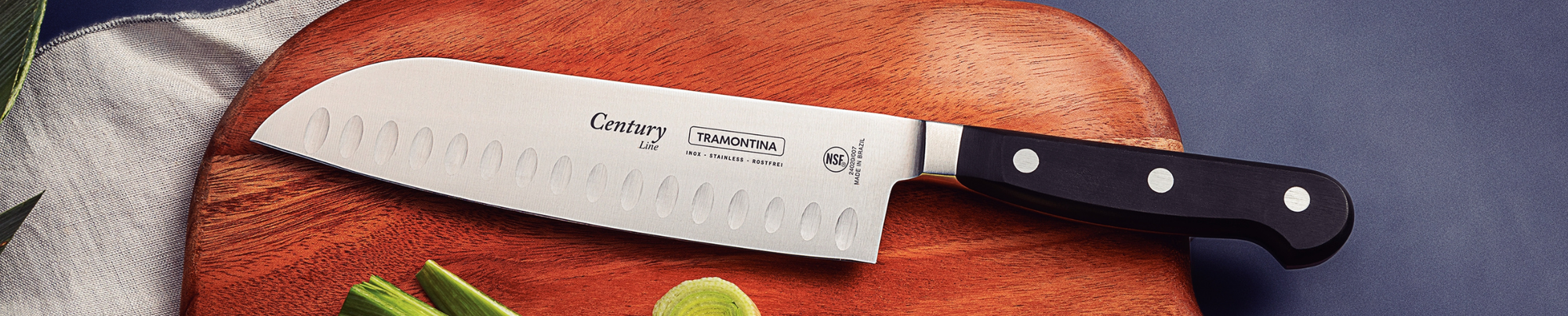
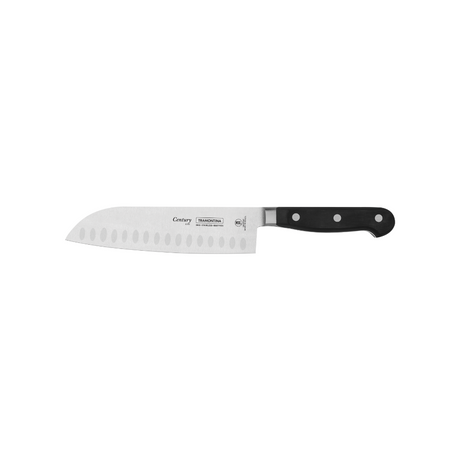
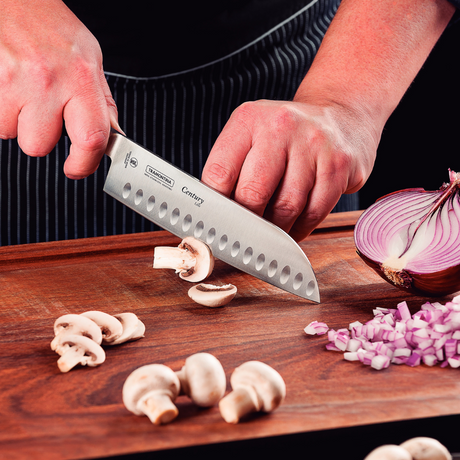
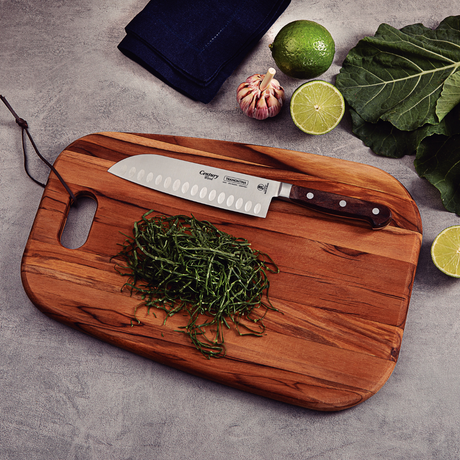
The Santoku knife is widely celebrated as the ultimate all-purpose kitchen workhorse, and Tramontina’s collection is specifically crafted to deliver on that promise. With its distinctive flat edge and gently curved tip, this versatile blade is a master of three key tasks, slicing, dicing, and mincing, making it an indispensable santoku knife for both professional chefs and home cooks. It is the ideal tool for anyone looking for a single, versatile, and incredibly reliable knife that can handle a wide variety of ingredients with flawless ease, from dense root vegetables to delicate proteins.
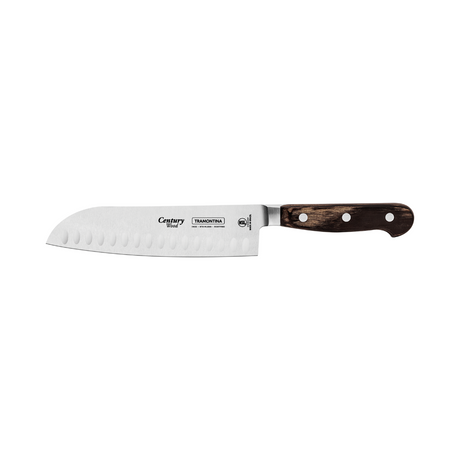
Our Tramontina santoku knife collection is made from premium stainless steel, ensuring an incredibly sharp, lasting edge that retains its performance. Many of our models elevate efficiency further by featuring a series of indentations along the blade, known as a "Grantons edge." These indentations create essential air pockets to dramatically reduce friction and prevent food from sticking as you cut. This allows for significantly faster, more efficient prep work and cleaner, effortless slices.
The balanced construction and ergonomic handle design make using our santoku knife comfortable and easy to control, giving you the precision needed for everything from fine dicing vegetables to expertly preparing delicate fillets. Explore our superior range of santoku knives and experience the perfect blend of Japanese-inspired functionality and Tramontina's century-old, trusted craftsmanship.
Frequently Asked Questions
What is the main difference between a Santoku knife and a Chef's knife?
What is the main difference between a Santoku knife and a Chef's knife?
The main difference between a Santoku knife and a Chef's knife is their blade shape and cutting motion. A Chef's knife has a curved edge and pointed tip, ideal for a rocking motion and versatile tasks like chopping, slicing, and mincing. In contrast, a Santoku knife has a flatter blade and a rounded tip, designed for straight up-and-down chopping with precision, especially for vegetables, fish, and boneless meats. Chef’s knives are usually longer (8–10 inches), while Santokus are shorter (5–7 inches), making them better suited for different cutting styles and preferences.
What are the indentations on the side of the blade for?
What are the indentations on the side of the blade for?
The indentations on the side of a Santoku knife blade, known as granton edges or hollow edges, help reduce friction and prevent food from sticking to the blade while slicing. These small, oval-shaped dimples create air pockets between the blade and the food, making it easier to achieve clean, precise cuts—especially useful when slicing thin pieces of vegetables, fish, or meats.
Is a Santoku knife a good all-purpose knife?
Is a Santoku knife a good all-purpose knife?
A Santoku knife can be a good all-purpose knife, especially for home cooks who primarily prepare vegetables, boneless meats, and fish. Its shorter, lighter blade and straight edge make it ideal for precise slicing, dicing, and chopping with a straight-down motion. However, it may not be as versatile as a typical chef's knife for tasks that require a rocking motion or cutting through tougher ingredients like bones or large cuts of meat. For many kitchen tasks, though, the Santoku performs well and is a solid all-around choice.
What is a santoku knife best for?
What is a santoku knife best for?
A Santoku knife is best for precision tasks like slicing, dicing, and chopping vegetables, fruits, boneless meats, and fish. Its flat edge and slightly curved tip make it ideal for straight, downward cuts rather than rocking motions, allowing for clean, uniform slices. The blade is typically thinner and shorter than a chef’s knife, offering better control and maneuverability, especially for fine or detailed work. It's a great choice for cooks who value speed, precision, and efficiency in everyday food prep.